

Why Dairy Management Compensation Needs More Context Than Team Size
By: Rick Pascual
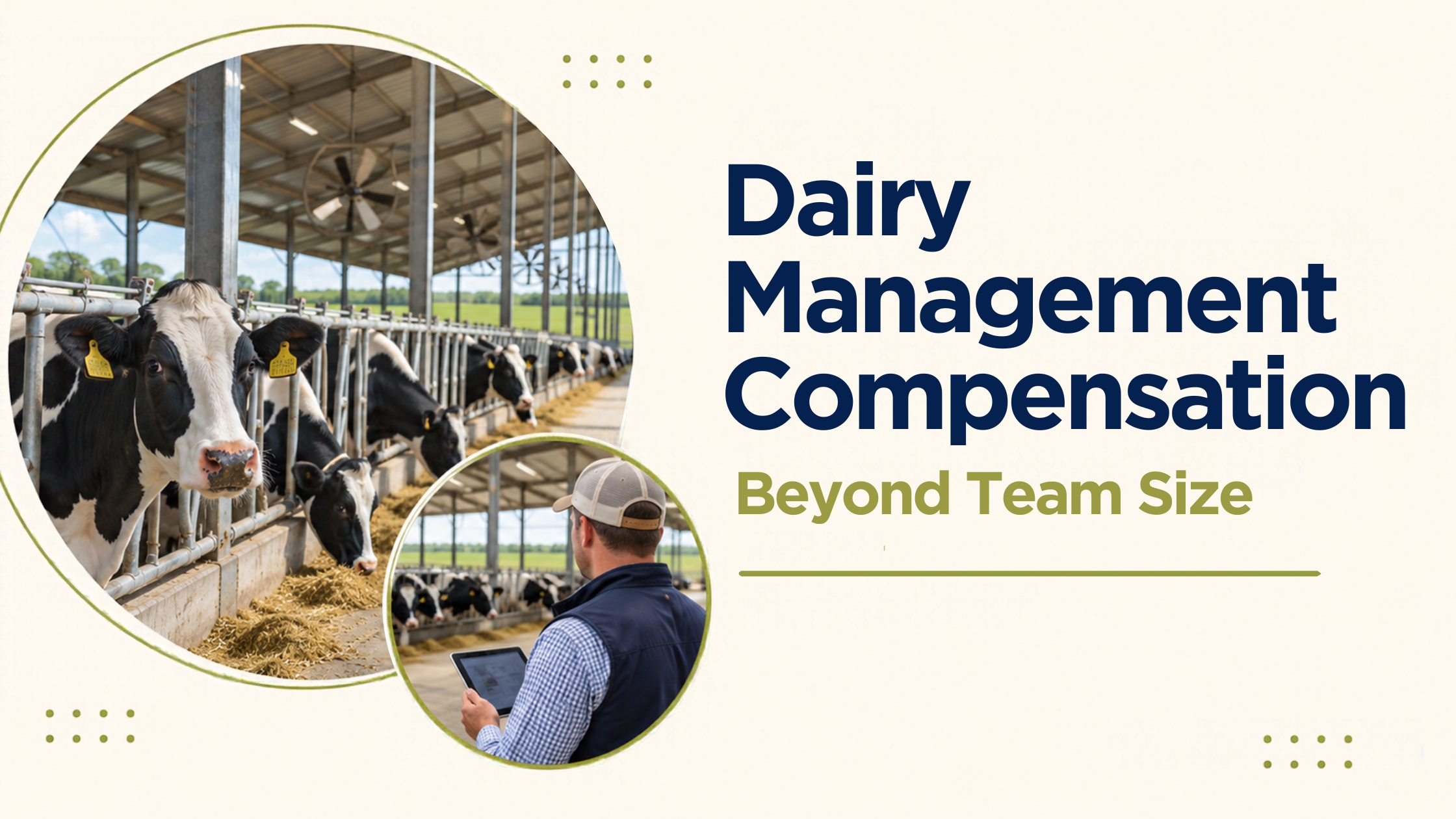
Dairy management compensation is difficult to benchmark from a title alone. Our 2026 Animal Health & Nutrition Technical Professional Salary Survey included 14 Dairy managers within Technical/Sales Support. Three supervised one or two employees, while 11 supervised three or more.
This is a small respondent group, so the figures should be used as market context rather than a compensation schedule.
Even within those 14 responses, the range shows why employers need more information than just team size when evaluating a management package.
Among the 11 managers supervising three or more employees, six reported total taxable income of $220,000 or more.
The other five ranged from less than $90,000 to $170,000-$189,999. The three managers supervising one or two employees also spanned a wide range: less than $90,000, $150,000-$169,999, and $220,000 or more.
Headcount Gives Only One Dimension of the Job
The direct-report count is useful because it indicates the size of the team. It does not explain the team’s condition, the customer exposure associated with the role, or the decisions the manager is expected to own.
A Dairy manager may be responsible for hiring, coaching, technical credibility, strategic accounts, territory coverage, performance management, customer retention, and coordination with commercial leadership. Some managers continue to carry direct technical or customer responsibilities while leading the group.
Those responsibilities change the position. They also change what an experienced candidate may expect from the compensation package.
Authority Changes How Candidates Evaluate Responsibility
Experienced managers usually want to know what authority comes with the job. If the person is accountable for team performance, the company should be able to explain who controls staffing decisions. If the manager owns customer outcomes, the candidate will want to understand what resources are available when a problem needs to be solved.
The same applies to performance issues, budgets, hiring, and growth expectations. A role can carry significant accountability on paper while giving the manager limited ability to change the conditions that drive those results.
That structure becomes part of the recruiting conversation. Compensation can attract attention, but the position still has to provide the manager with a realistic path to success.
Incentive Opportunity Can Be a Large Part of Total Compensation
The incentive data adds another layer. Among the 14 Dairy managers, three reported incentive opportunities of 11%-20% of base salary, five reported 21%-30%, and five reported more than 30%. One respondent reported having no formal incentive plan or being ineligible.
A base salary comparison can miss a meaningful portion of the package. Employers recruiting an experienced manager should understand how the candidate’s current incentive plan works and be prepared to explain the new plan with similar detail.
Candidates may want to know what determines the payout, how much control they have over the outcome, how targets have been paid historically, and whether the goals are individual, team-based, or company-wide. Those details help the candidate compare expected total compensation rather than two base salary figures.
Most Managers in This Sample Were Not Actively Searching
Only one of the 14 Dairy managers in the survey was actively seeking another job. That respondent indicated that an increase of up to 10% could be enough to consider a move.
The small active-candidate count has practical implications for hiring. A company searching for experienced Dairy management talent should expect to recruit people who already have a team, customer relationships, an incentive plan, and credibility inside their current organization.
Those professionals need enough information to judge whether a move improves their situation. The first conversation should cover the team’s scope, customer responsibilities, geography, technical expectations, authority, incentive structure, travel, and the role’s first-year priorities.
Define the Position Before Benchmarking the Package
The survey also notes that experience level and tenure were not factors in the analysis, and compensation refers to total taxable income reported on a W-2. Those limits matter when employers use the figures.
A useful benchmark begins with the actual work. Hiring teams should define the team’s size and condition, customer responsibilities, geography, technical scope, authority, incentive opportunities, travel, and what success should look like during the first year.
Once those details are clear, compensation data becomes easier to interpret. The company can compare the position with managers who carry similar responsibilities rather than relying on the title or direct-report count alone.
For Dairy management searches, that additional context can prevent two common problems: setting a package for a smaller job than the company actually needs, and targeting experienced managers without giving them enough reason to consider the move.
Source: 2026 Animal Health & Nutrition Technical Professional Salary Survey, Continental Search
If you would like to talk about upgrading your team, succession planning, or recruiting the people you will need for 2027, contact me at Rick@ContinentalSearch.com for a confidential conversation.